I Made Something Myself — Is It Good Enough to Be a "Real Business"?
If you've been standing in your kitchen, your craft room, or your garage workshop, holding something you made with your own two hands and wondering, "Could this ever actually be a business?" …you are not alone. You are exactly where you're supposed to be.
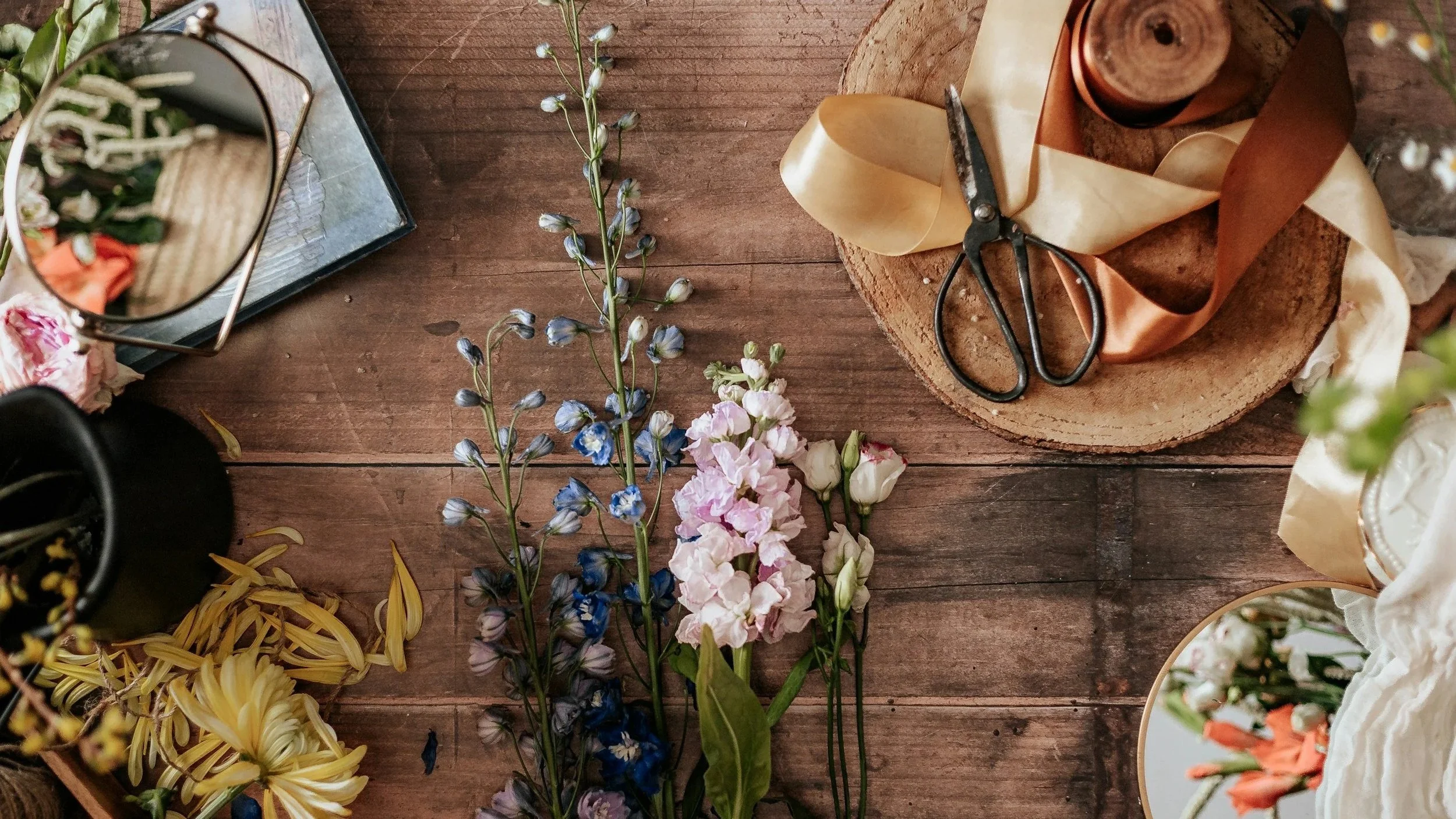
This is, without exaggeration, one of the most common questions my clients bring to me. And every single time, I love hearing it. Not because it's an easy question, but because it means someone has already done the hardest part: they've made something real. They've turned an idea into an object, a recipe into a product, a "someday" into a real thing sitting right there on the table in front of them.
So let's talk about it. Is your homemade, handcrafted, made-in-your-own-space creation "enough" to build a business around?
The Short Answer: Yes, Absolutely
The longer answer is that "good enough" isn't really the right question to be asking, but we'll get there in a moment.
Here's what I want you to understand first: handmade and homemade products are some of the most exciting and compelling foundations a business can be built on. This isn't a consolation prize compared to some polished, factory-made alternative. It's a genuine advantage.
We live in a world increasingly dominated by mass production and fast fashion — where everything is made quickly, cheaply, and identically, by hands (or machines) that will never meet the people who buy the final product. Products are disposable and break easily, designed to be used and tossed aside. In that world, something made with care, intention, and a personal touch doesn't just stand out. It resonates. It tells a story. And it makes people feel something.
That feeling is not a small thing. It's exactly what people are searching for.
Why Your "Just a Handmade Sample" Might Be More Than You Think
When you make something at home — whether it's a candle, a sauce, a piece of jewelry, a skincare product, a baked good — you bring things to it that simply cannot be manufactured at scale:
Intention. You chose every ingredient, every material, every detail because it mattered to you.
Care. You made it slowly, by hand, probably more than once, refining it until it felt right.
A story. There's a why behind what you made — a memory, a need you noticed, a gap you wanted to fill.
These aren't just nice extras. They are the emotional currency that builds real, lasting customer relationships. People don't just buy products anymore — they buy the person and the story behind them. Your handmade creation already has both, and that’s a huge starting advantage.
So Why Does It Still Feel Uncertain?
If your handmade creation already has all of this going for it, why does it still feel scary to call it a "real business"?
Usually, it's because there's a gap between making something wonderful and knowing how to build a business around it. That gap is completely normal, and it has nothing to do with whether your product is good enough. It has everything to do with strategy — and strategy is learnable.
Questions like:
How do I price this in a way that's fair to me and sustainable?
How do I scale production without losing what makes it special?
How do I find the people who will love this as much as I do?
How do I turn "I made a thing" into "I run a business"?
These aren't signs that your idea isn't good enough. They're simply the next questions on the road to success — and they're exactly the kind of questions I love helping people work through.
The Real Question Isn't "Is It Good Enough"
Here's the reframe I want to offer you: the question isn't whether your homemade product is good enough to be a business. The question is how to build the right strategy around something that's already special.
You don't need to reinvent your product to make it "business-ready." You just need a plan that protects its authenticity while helping it reach more people, more sustainably, and more profitably.
That's the work. And it's work I genuinely love doing — taking something someone has poured their heart into and helping them build a structure around it so it can grow without losing the very thing that made it special in the first place.
You're Allowed to Start Here
So if you're holding something you made right now, wondering if it's enough — let this be your sign. It definitely is. The care you put into it, the story behind it, the personal touch only you could bring — that's not something to second-guess. That's your foundation.
The rest : the pricing, the scaling, the strategy, the systems — that's what we build together, one step at a time.