What You Need to Know About Working With a Factory Partner
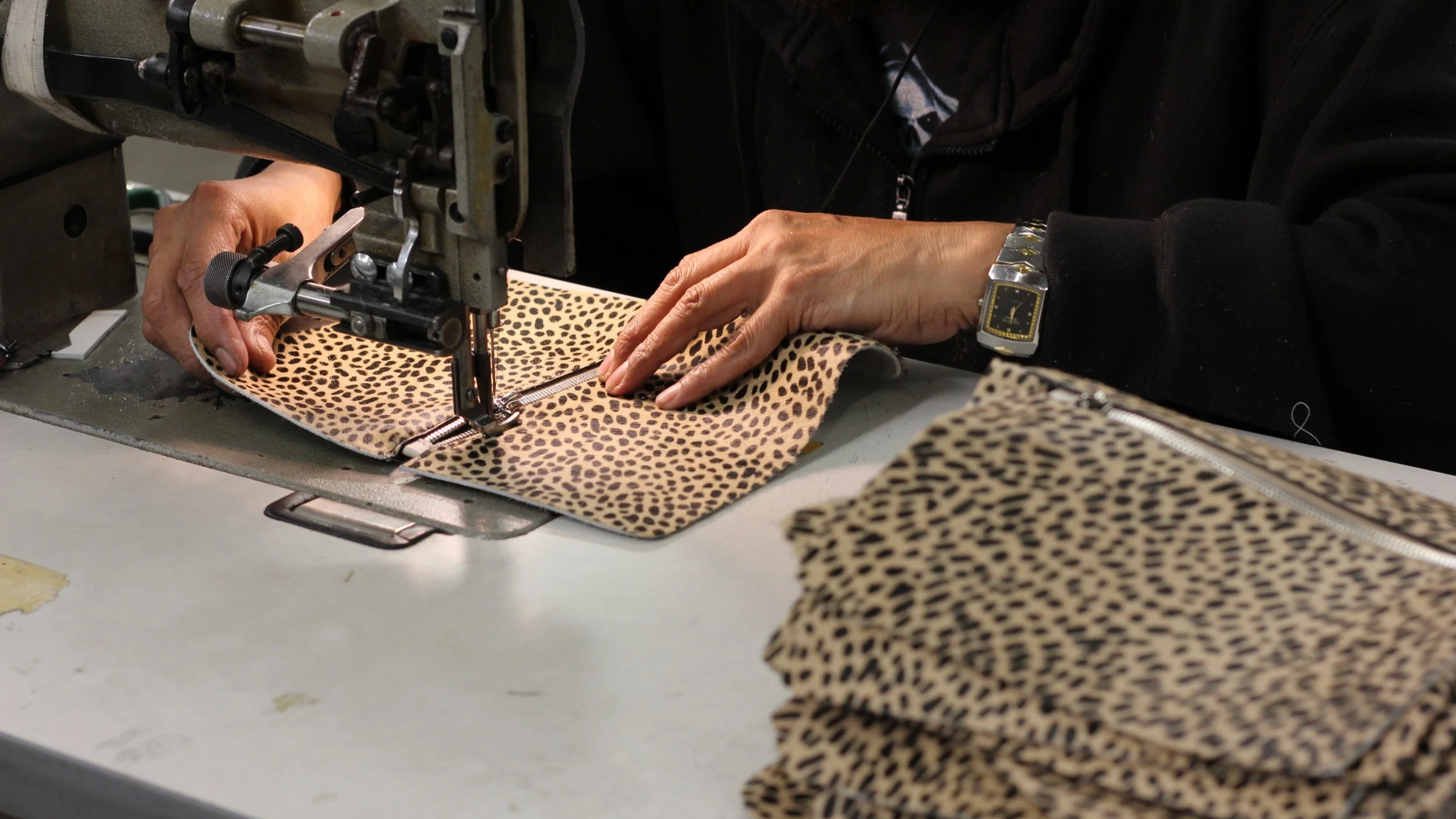
If you're bringing a product to life through an outside manufacturer — say, a handbag factory producing your tote bags — congratulations! You're stepping into one of the most exciting (and admittedly, most mysterious-feeling) parts of building a physical product business. The good news? Once you understand the rhythm of the process, it flows far more smoothly than you'd expect. Let's walk through it together, using a tote bag as our example.
The Three Essentials You'll Need to Provide
Before your factory partner can get to work, there are three core things you'll need to hand off:
Technical drawings and design instructions
Materials
Packaging instructions
And while these three are non-negotiable, it's also smart practice to include a few organizational documents alongside them — things like a material tracking spreadsheet and WIP (work-in-progress) reports. These extras aren't strictly required, but they make communication clearer and keep everyone on the same page as production moves forward. Think of them as the safety net that catches small issues before they become big ones.
Now let's break down exactly what this looks like in practice:
Step 1: Technical Drawings (Tech Packs)
Once your design exists — whether that's a detailed sketch or an actual first sample — the next step is translating it into a tech pack. This is the document that speaks the factory's language. It clearly communicates to the pattern-makers exactly how your tote bag should be constructed: dimensions, seaming and stitching details, hardware placement, and which materials go where.
Think of the tech pack as the blueprint that removes guesswork. The more detailed and precise it is, the more accurately your factory can bring your vision to life — and the fewer rounds of revisions you'll need later. This is one area where a little extra time up front pays off enormously down the line.
Step 2: Materials
Next comes materials — the fabrics, linings, hardware, and trims that will make up the exterior and interior of your bag. Most of the time, you (the designer!) will be the one selecting these. Depending on the factory, you may source materials yourself and ship them over, or the factory may be able to source them on your behalf. Every factory operates a little differently here, so it's worth asking early what their specific process looks like.
Whenever possible, it's ideal to meet with your factory in person to walk through the tech pack together and hand off materials directly. There's something invaluable about being in the same room, pointing at a swatch, and confirming everyone's on the same page. That said, don't worry if an in-person meeting isn't realistic — especially if you're manufacturing in a different country overseas. Clear, detailed email communication works perfectly well too, and plenty of successful product lines are built entirely through remote collaboration.
Step 3: Samples
With your tech pack and materials in hand, the factory will create patterns and produce an initial sample. If this is the first time you are seeing your design brought to life, this is your moment to scrutinize the details and ensure the finished design matches your initial vision. Do the materials look and feel the way you expected? Does the bag feel good to use and carry? If changes are needed, you’ll prepare revised tech packs and the factory will make an updated sample - this process repeats until you feel ready to proceed with production.
As production begins, the factory may prepare one more sample, often called a TOP sample (Top Of Production sample). Again, this is your moment to make sure everything is correct. Are the details precise and matching your tech pack? Is the stitching clean? This sample becomes the gold standard for your entire production run, so take your time here. Any adjustments are far easier (and cheaper) to make now than after hundreds of bags have already been produced.
Step 4: Quality Control at the End of Production
Once production wraps up, you'll have the opportunity to return to the factory and check the final product. Depending on your order size, you might inspect every single bag, or do "spot checks" — pulling a representative sample to check for quality and consistency.
If small adjustments are needed, don't panic! This is rare, and most factories will accommodate quick fixes without much fuss. This step is really about giving yourself peace of mind before your product heads out into the world.
Step 5: Packing It All Up
The final piece of the puzzle is packaging, and this is where your factory can save you a huge amount of time and effort. Many factories are able to individually pack each tote so it arrives ready to ship straight to your customer.
Here's what that might look like:
Hangtags: A tag with your logo and product details, attached to each bag
Tissue paper wrapping: For that lovely unboxing moment
Polybags: A protective plastic bag that keeps each tote clean and dust-free during storage and transit
Dustbags: A soft fabric bag your customer can use at home to store the tote and protect it from dust in their closet — the factory can neatly fold this inside the bag itself
Labels and barcodes: If you're working with a 3PL (third-party logistics) partner for warehousing and shipping, the factory can apply the necessary labels and barcodes directly to the polybags
Yes, having the factory handle packaging adds cost. But consider what you're buying with that cost: hours (or days) of your own time, a smoother handoff to your 3PL, and inventory that's organized and ready to move the moment it arrives. For many growing brands, this trade-off is well worth it.
You've Got This
Working through the manufacturing process with a factory partner can feel daunting at first when there are a lot of moving pieces, unfamiliar terms, and decisions to make. But here's the truth: once you understand the full picture and provide detailed, thoughtful information at each stage, the process flows seamlessly.
Every tech pack you refine, every sample you review, every spot check you do — it's all building toward that incredible moment when you hold your finished product in your hands for the first time. That feeling is worth every step of the journey, and I'm here to guide you and cheer you on along the way.